

Follow a causal timeline
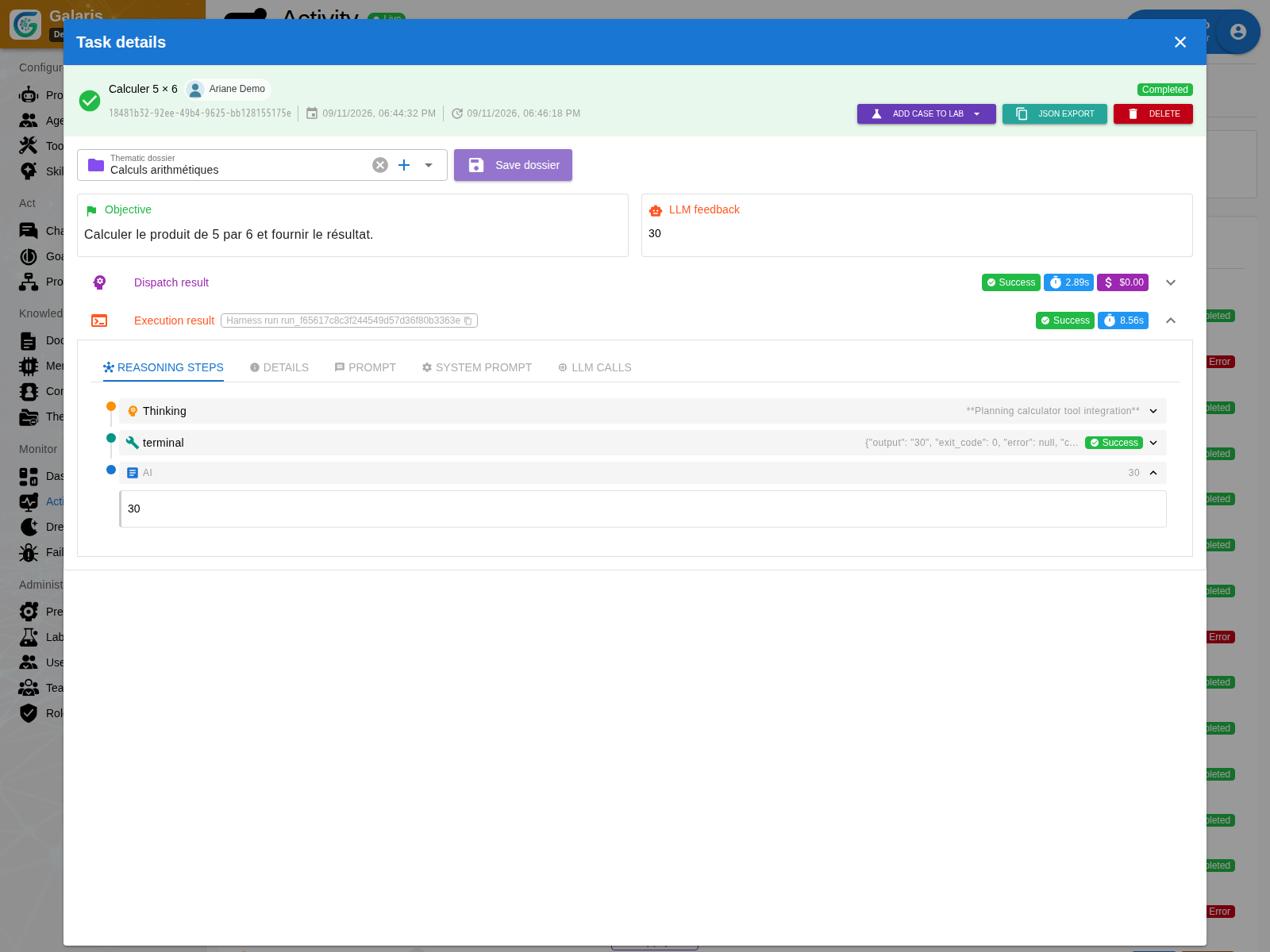
Related identifiers connect the request, Task, attempt, model call, tool and Process. Use those links to understand what caused an outcome. A collection of unrelated log lines cannot show whether a specific deliverable came from the intended mission.
Require evidence of delivery
A model saying that a file was saved is not a delivery receipt. Check the identified artifact, destination and transfer result in the Working Set. If transport fails after production succeeds, inspect delivery recovery before rerunning the whole task.
Put cost next to the result
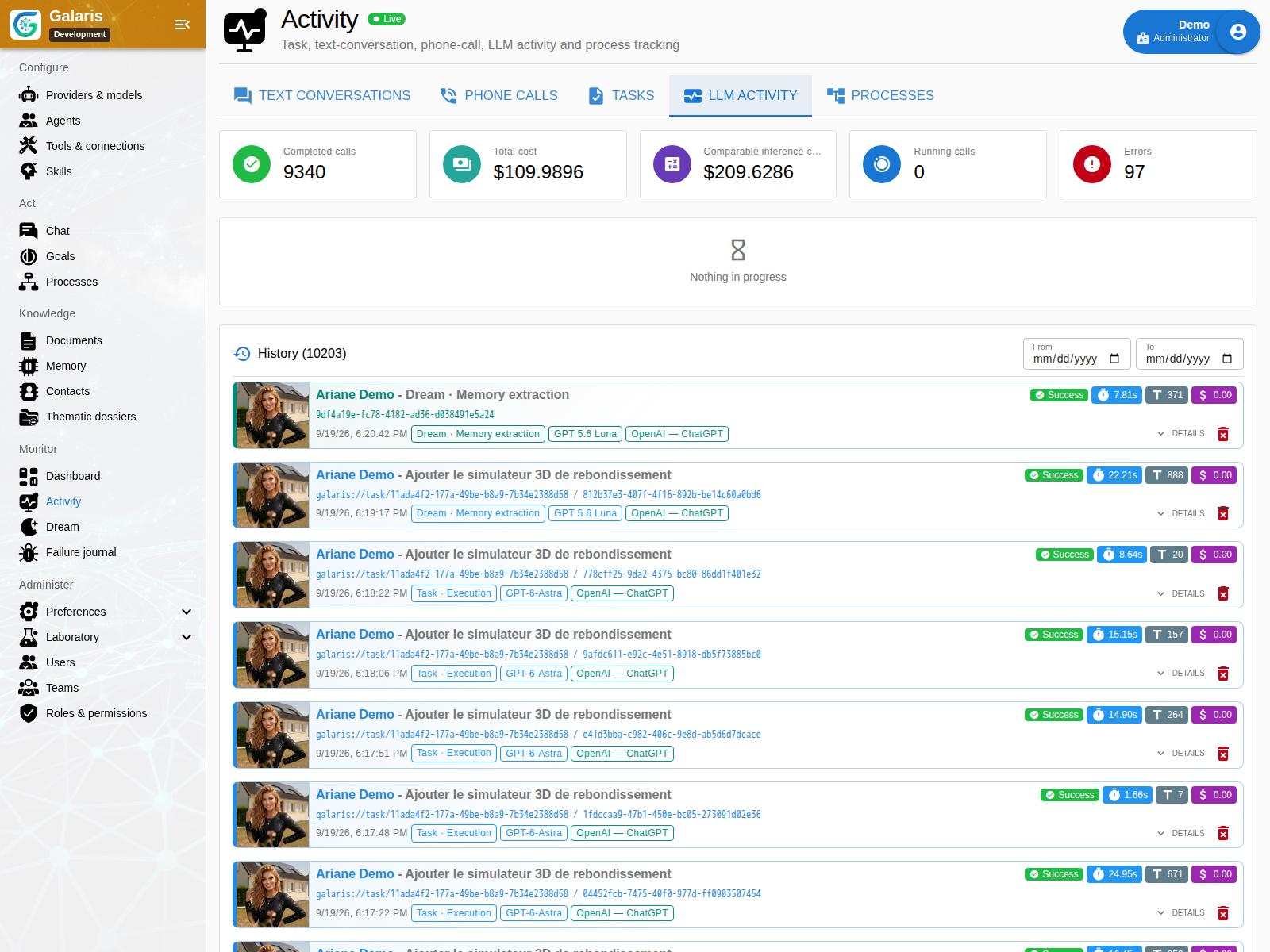
Inspect model usage, inference estimates and billed cost alongside the agent, surface and Task harness. Missing billing data must remain unknown. Monthly views reveal trends; detailed records explain the execution behind them. Subscription access and metered usage are different cost signals.
Measure accepted work
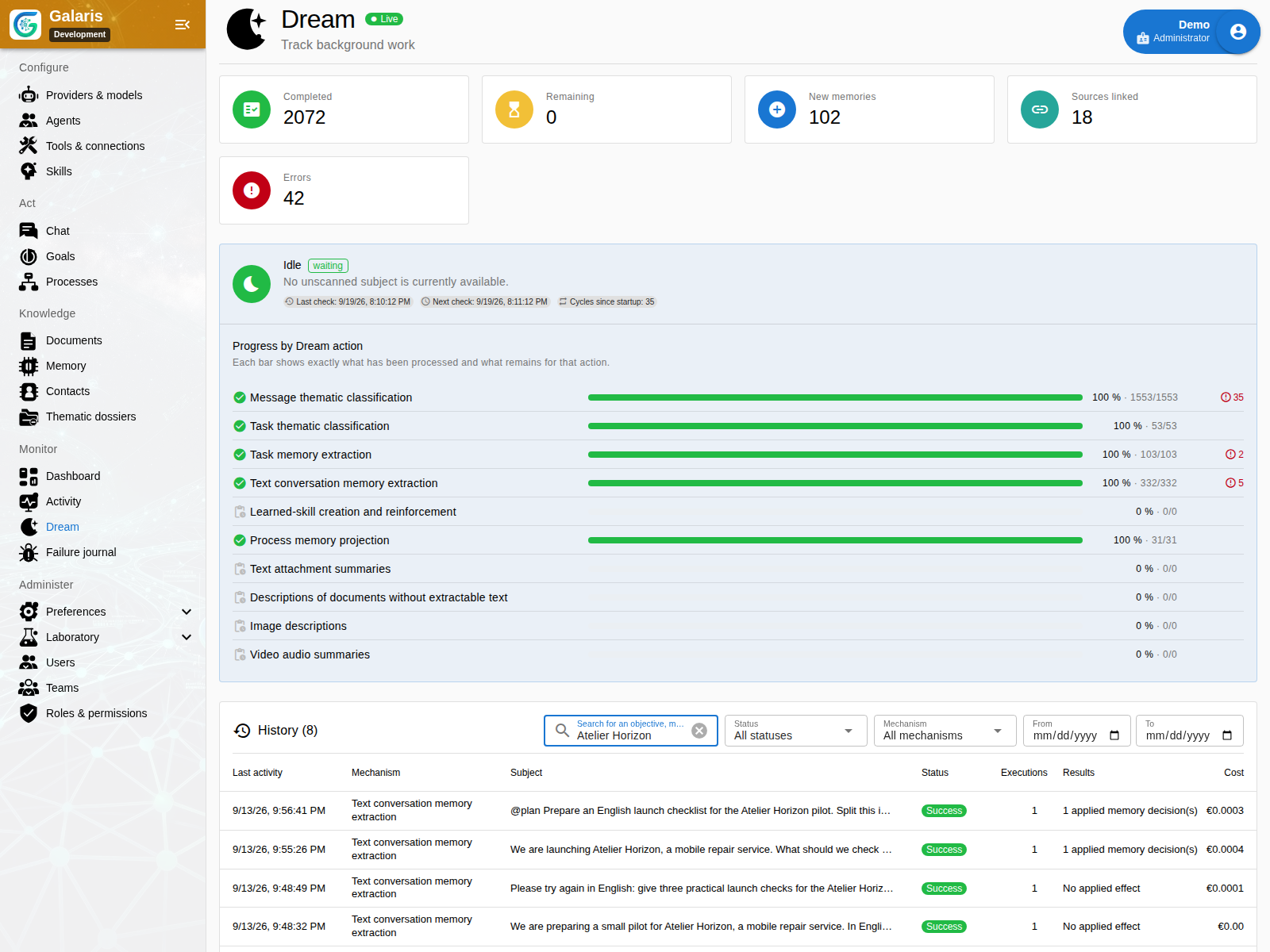
Track successful and failed missions, duration, human corrections, accepted deliverables and known cost. Record configuration changes when comparing runs. Token counts alone do not establish quality or business value.
Read cost together with its qualification
Monitoring distinguishes requested and effective models, reasoning effort, available input/output/cache tokens, duration and first-token time. Amounts can be known, estimated, partial or subscription-based. Missing data do not establish zero cost.
Traces show progress messages and blocks actually exposed by the runtime, redacted according to access. They do not reveal unpublished private reasoning.
Keep a lasting problem record
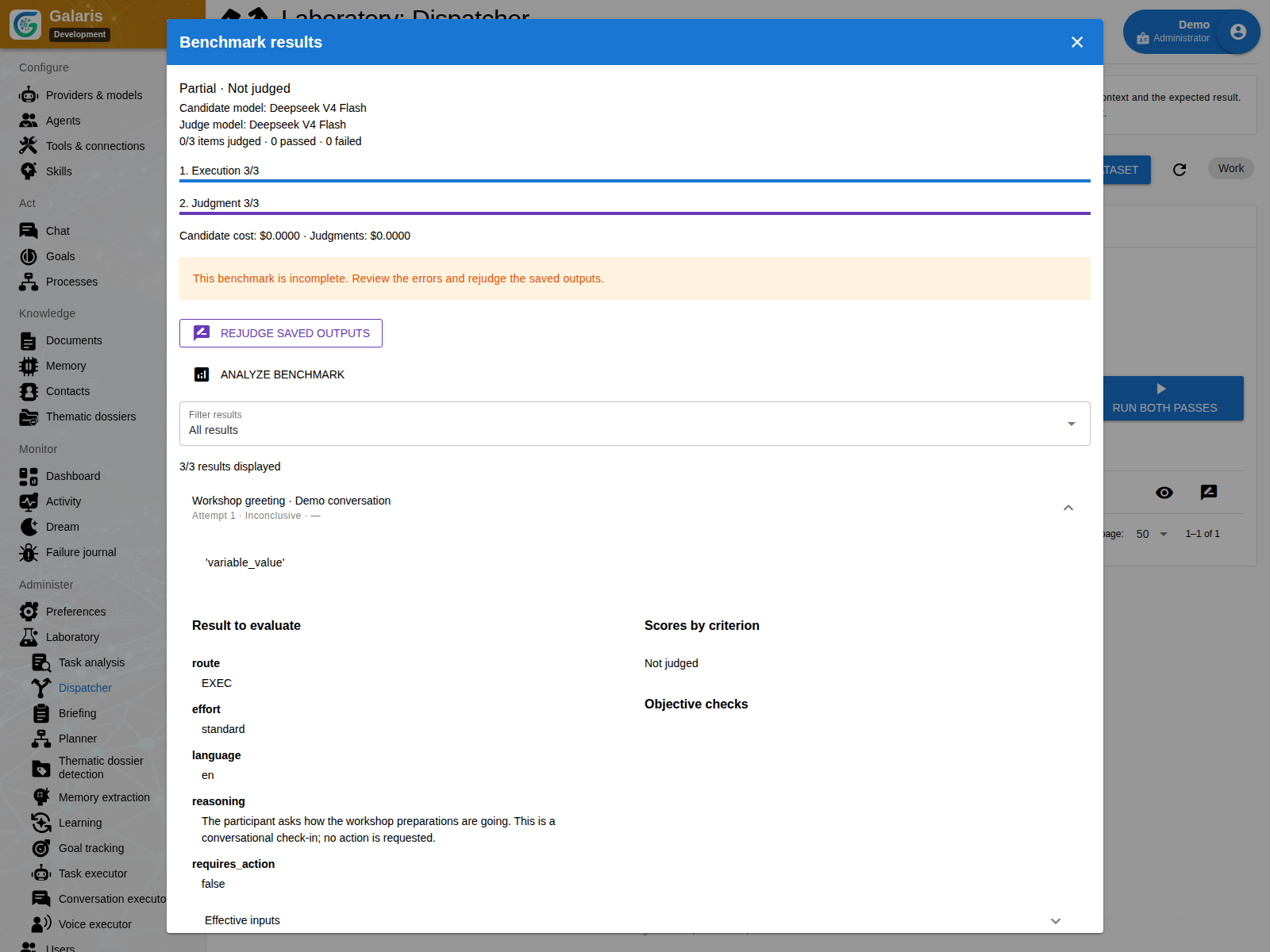
Incidents group similar occurrences into families with first and latest occurrence, count and review state. Diagnosis can record cause, remediation and regression test. A Task or round can then become a Lab case.
Read retained timings and costs
Views distinguish processing, waiting, pauses and retry delays. Costs use persisted calls, including preparation and routing, without recounting a call on repeated finalisation. An inference links its request, attempts and physical provider calls; reading its result does not run the model again.