

Work when capacity is available
Dream uses available periods for background maintenance. It runs within configured duration and retry limits, yields to priority activity such as voice and stores receipts for its work.
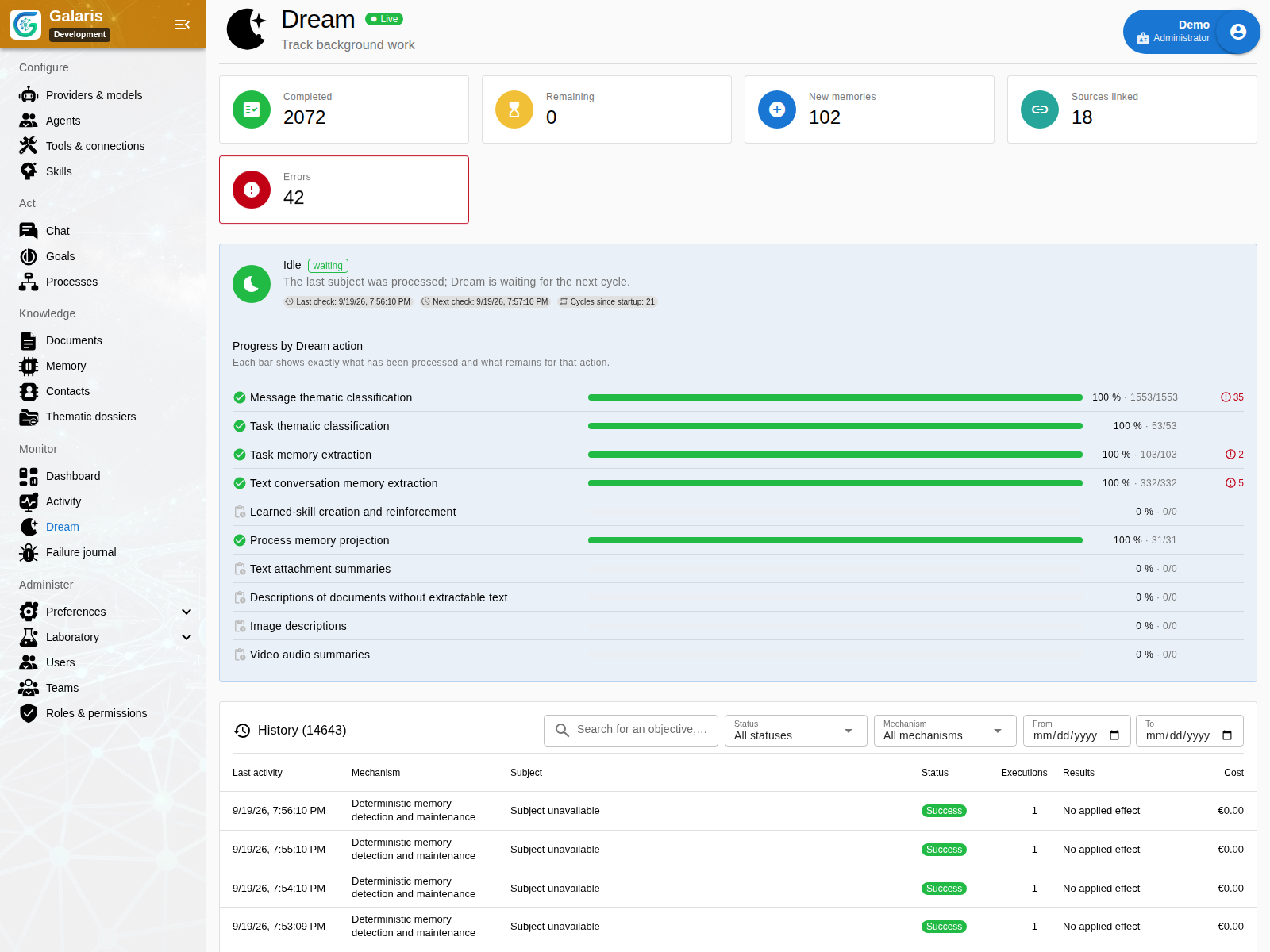
Consolidate useful context
Classification, memory extraction and process projections help connect completed work to durable knowledge. Maintenance findings identify duplicates, contradictions or ageing. You can inspect decisions instead of assuming that background activity improved every result.
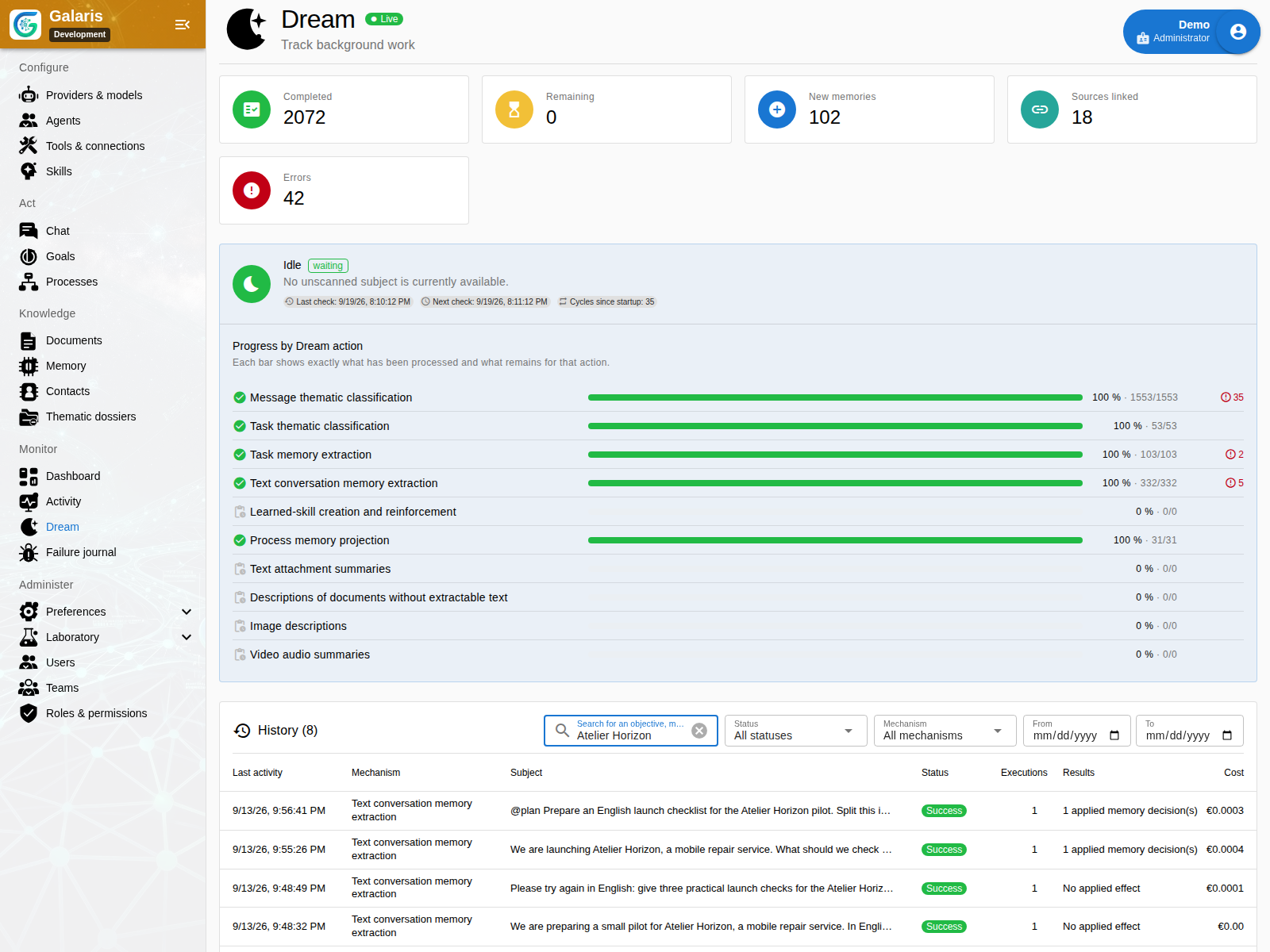
Learn from evidence
Procedural learning considers task outcomes, tool evidence and human corrections. A candidate retains its score and supporting tasks before activation. One successful attempt is not enough to establish a reliable procedure.
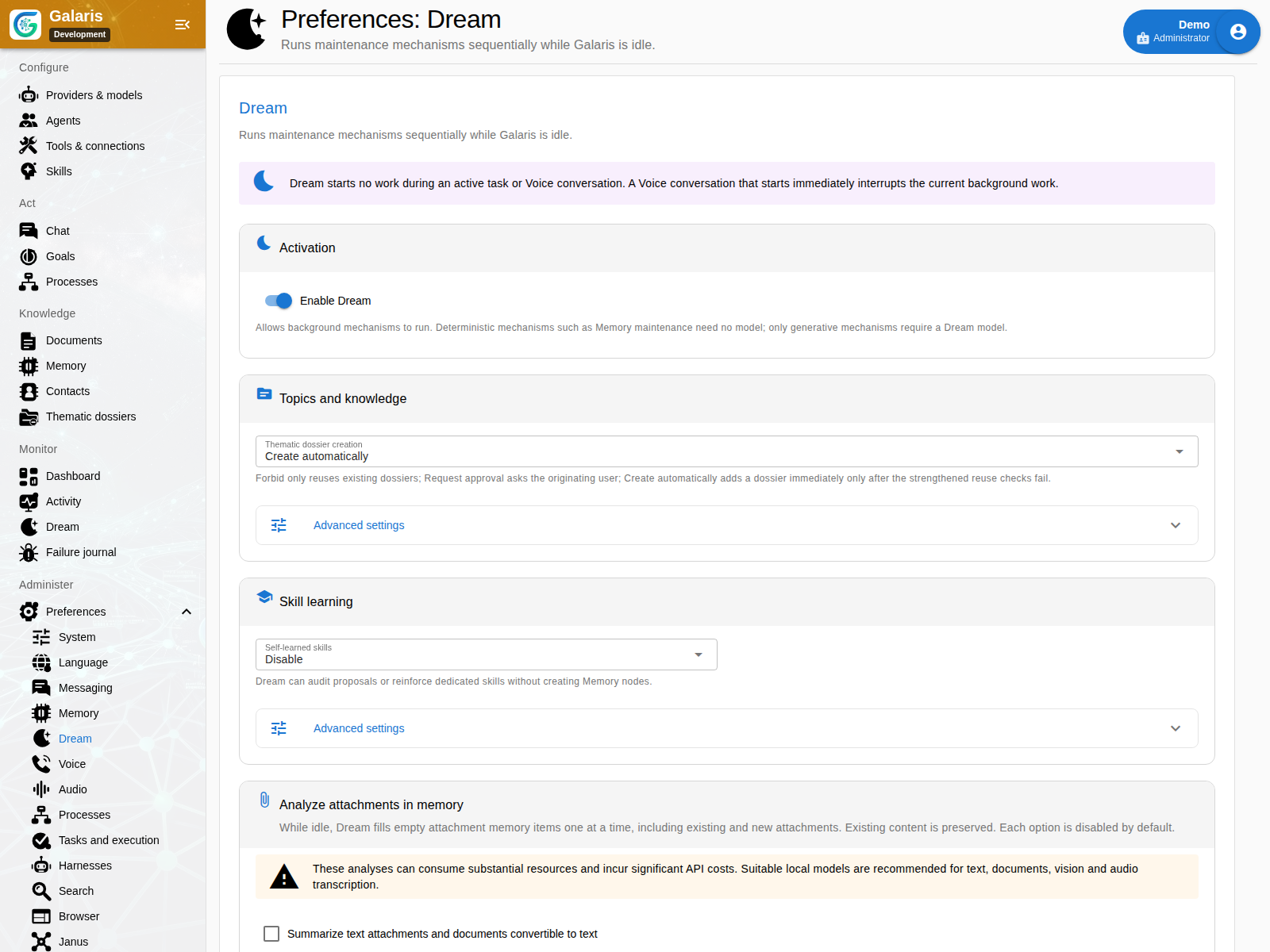
Keep the scope clear
Dream is background processing, not model retraining or unrestricted self-modification. It operates on authorised information and configured policies. The learned-skill feature is disabled by default and should be evaluated on the work it is meant to improve.
Recorded decisions, one mechanism at a time
Twelve registered mechanisms, including document repair and four optional attachment analyses, classify messages and tasks, extract knowledge from work and conversations, project processes, maintain memory findings and examine procedural learning. They run sequentially during available periods.
Extraction proposes CREATE, LINK or IGNORE. Adding a source does not rewrite the memory content. Receipts retain prepared output and its application so recovery can reuse an existing model result.
Observe before learning
Modes are off, observe and learn. Observation retains a proposal; learning can apply it. A score and evidence from multiple distinct tasks—three by default—must support activating a procedure. Positive evidence, corrections and failures remain inspectable.
The skill library distinguishes these procedures from ordinary SKILL.md packages.
Describe attachments when enabled
Four independent options, off by default, fill empty descriptions: text and convertible documents, documents requiring a document model, images, and video audio tracks. Text PDFs and supported office formats can be extracted and summarised; scanned PDFs require an appropriate document resource.
Dream handles one attachment per mechanism pass, retains receipts and preserves existing descriptions. The video option transcribes sound; it does not analyse frames. Unsupported files may remain without a description. Repairing document links is separate from these generative analyses.