

A specialist receives a task
Delegation creates an identified child task with instructions and a link to its parent. The specialist retains its own identity, capabilities and execution policy. Its contribution can be inspected independently.
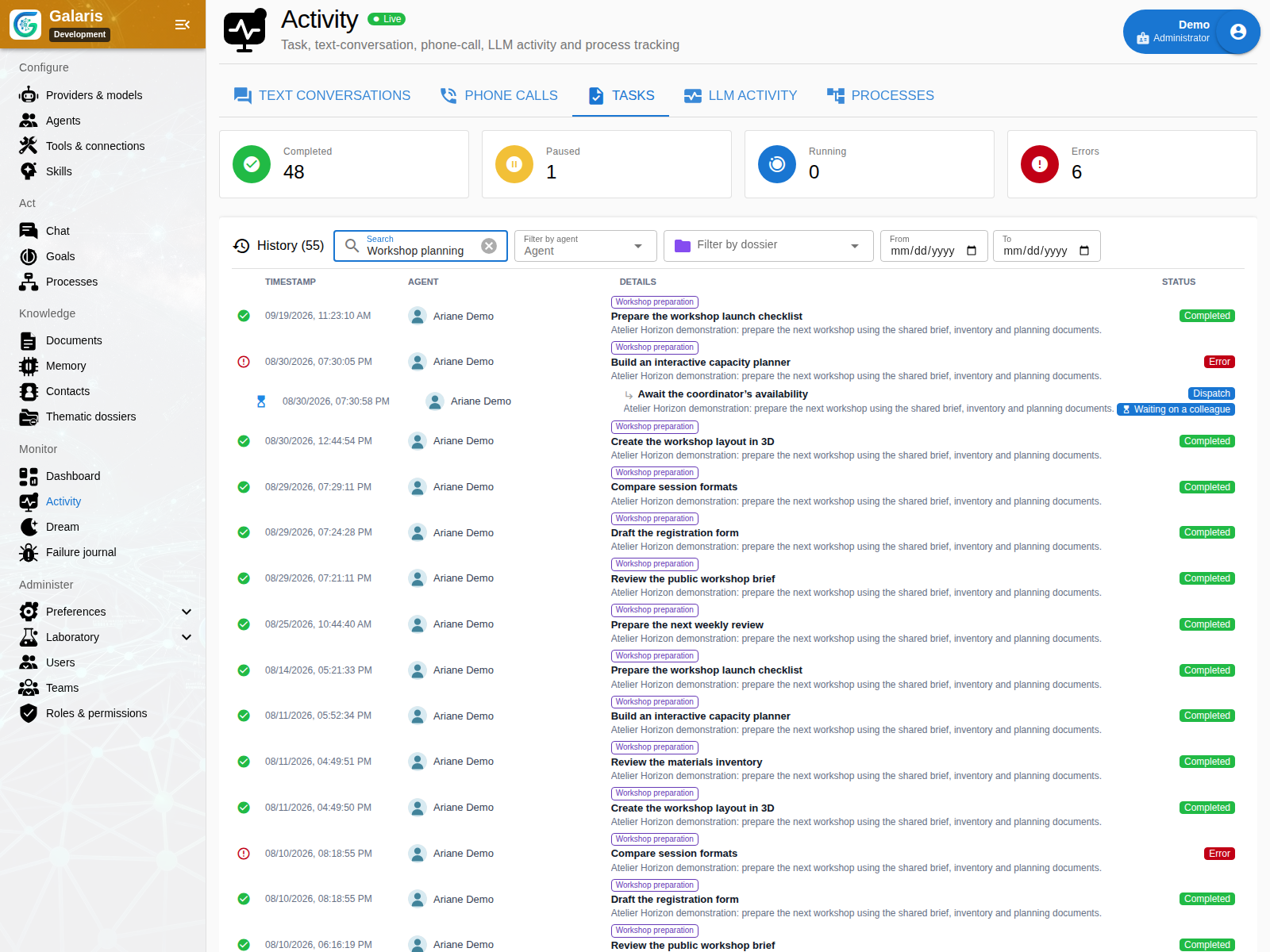
Four stages of collaboration
Define the contribution, delegate to an authorised colleague, wait for the result, then integrate it. The parent may suspend while waiting. Correlation links the answer to the request that needs it.
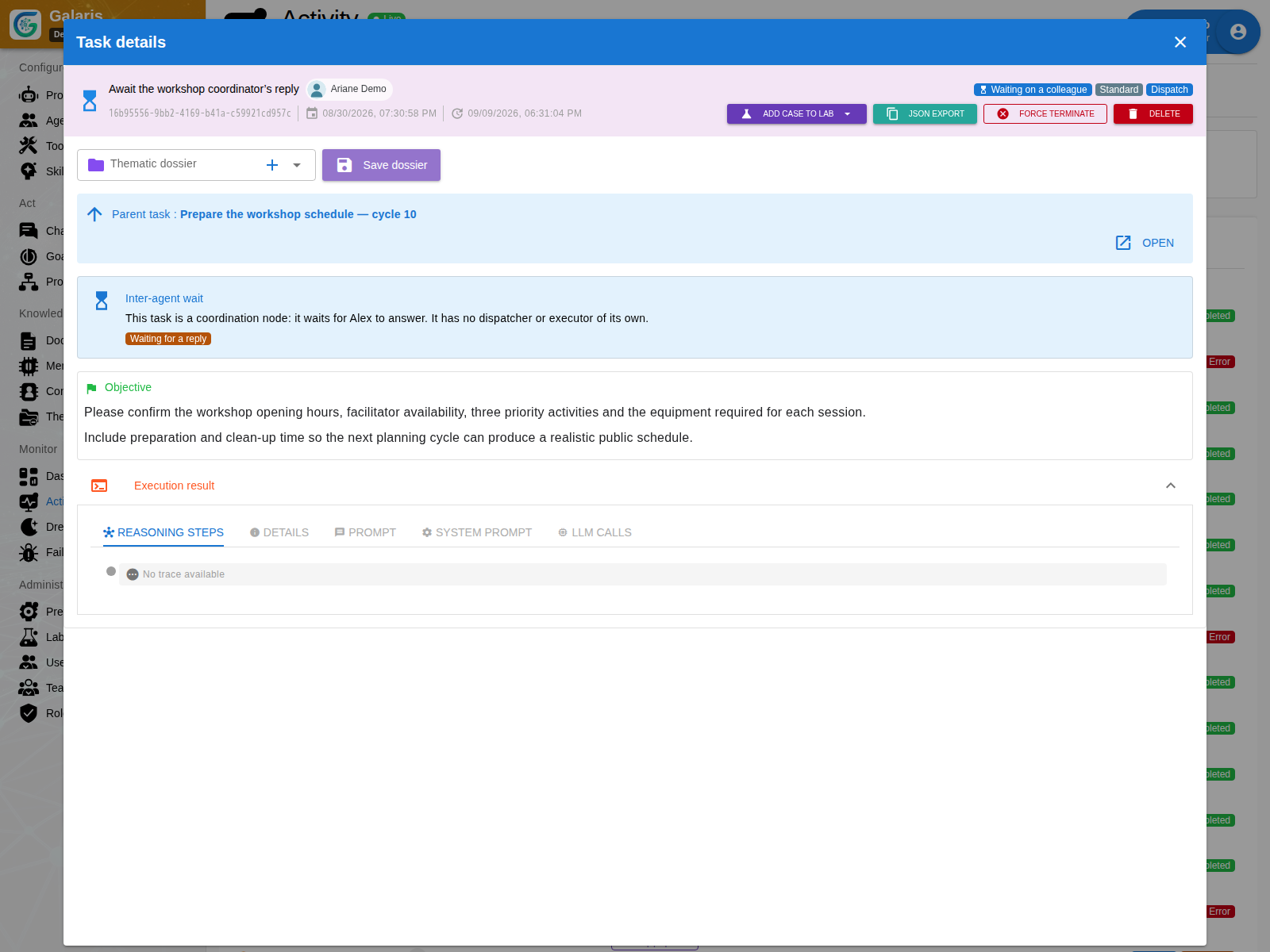
Keep collaboration bounded
Deadlines, turn limits and explicit waiting states constrain exchanges. A late reply does not reopen a completed parent arbitrarily. Human pauses take precedence over new delegation.
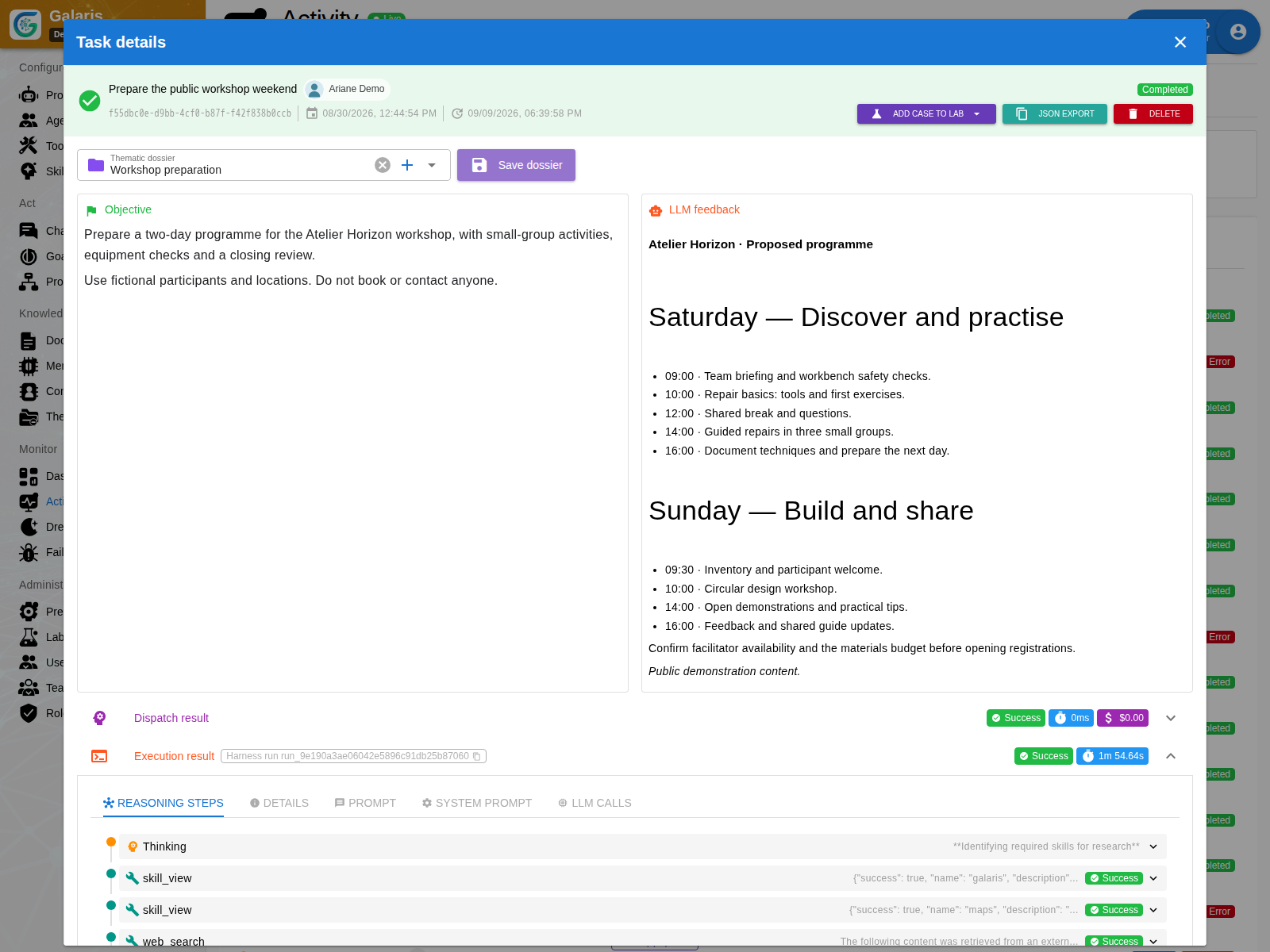
Research, then prepare the note
A coordinator asks a specialist to find sources for a launch dossier. The specialist returns evidence and unresolved questions. The coordinator prepares the final document and attributes conclusions to their sources. This is an illustrative workflow, not a recorded customer result.
Share the context a contribution needs
Agents discover authorised colleagues and their profiles. Two agents must share a team for the relevant communication and delegation. Membership does not expose another person’s private conversations.
A contribution may require explicit document sharing. The parent keeps its child link, waits for results and resumes synthesis. Waiting has deadlines and turn limits; a human pause takes priority.
Parent auto-approval does not automatically cross into another agent’s work. Configure team access
When is a multi-agent team useful?
Multi-agent orchestration determines who contributes, what they work on and when their result returns to the main mission. It is useful when research, verification and writing require different skills or access. A single agent may be enough for a simple request.
Before adding roles, define each deliverable and who reviews the final synthesis. The guide to building an AI agent team walks through this preparation; missions and plans explains how to follow the work.